Few people think of the zoo during the holiday season, but colder weather offers a chance to see animals behaving differently than they do in the heat of summer.
Zoo staffers are also decorating for the holidays, and winter brings another reason to visit: smaller crowds than in summer.
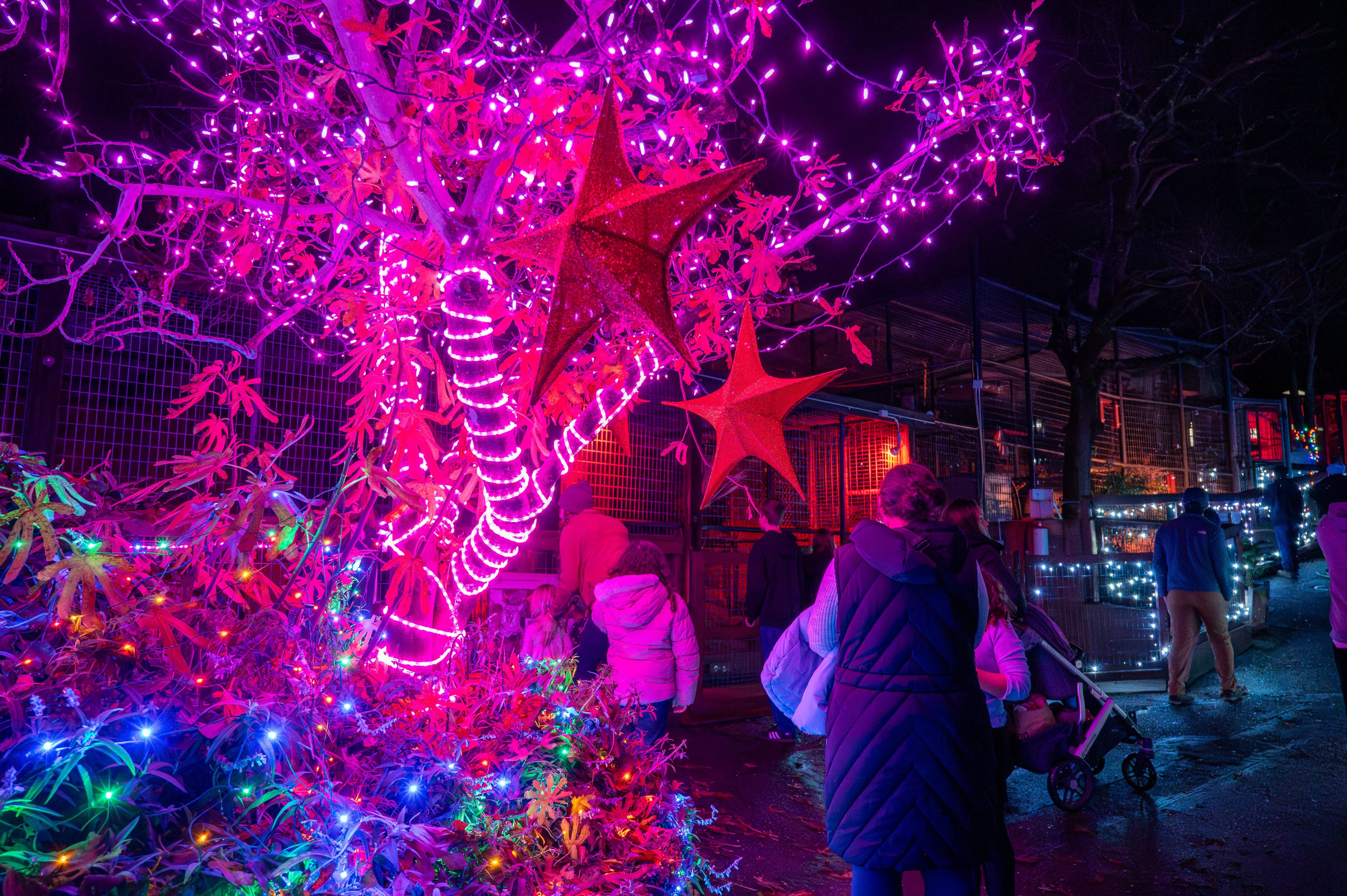
"We'll be putting Christmas lights up in early December," said Sydney Amestoy, community coordinator for the Sacramento Zoo. "We'll put up holiday decorations and there are snowflakes and ornamented Christmas trees."
The Sacramento Zoo, 3930 W. Landpark Drive, is on winter hours. It is open seven days a week from 9 a.m. to 4 p.m., with last entry at 3 p.m. The zoo is closed on Thanksgiving.
"The colder weather does cause the animals to behave differently," Amestoy said. "For example we have an alligator that adopts what is called brumation. It slows down its metabolism."
Alligators are reptiles and cold-blooded, Amestoy said, so they become sluggish as temperatures drop.
Other animals become more active in the cold and easier for visitors to see. In summer, they usually shelter out of sight in shaded structures. They include the red panda, river otters, the lion, the jaguar and the giraffe.
Animals that don't like cold weather, such as monkeys, the lion and the rhino, get heaters.
Among the zoo's new exhibits are giant African pouch rats, Amestoy said. The Sacramento Zoo is one of the few places in the country to see them.
The rats are native to desert regions of sub-Saharan Africa. At three feet long, they are among the largest rodents in the world, and they use cheek pouches to carry and hoard food.
The animals are prized in African countries such as Gambia for their sense of smell.
"We have three of them," Amestoy said. "These rats have a powerful sense of smell. They can be trained to sniff out land mines and detect the presence of tuberculosis in people, in countries where sophisticated medical equipment is not available."
The Sacramento Zoo does not host an evening holiday light festival. Instead, volunteers ranging from teens to older adults take part in what the zoo calls "holiday-themed animal enrichment," a kind of Christmas for the animals.
Volunteers build veterinarian-approved puzzles and pine cone feeders filled with treats, yams and cranberries. They also make toys and stuff cardboard objects with surprises, such as the scent of cinnamon, to encourage foraging.
Amestoy said winter is a good time to visit a local zoo.
"There are lots of interesting things to see including your favorite animals," she said. "You can check weather updates to see if we're open or closed, and we're fully open in the winter. Just put your coat on and come out and see us."

Volunteers hold light wands at the Folsom City Zoo gift shop.
Folsom zoo lights up after dark
Volunteers and staffers at the Folsom City Zoo Sanctuary, 403 Stafford St., are also decorating for the holidays. Zoo Manager Jocelyn Smeltzer said that, like people, animals enjoy cooler fall and winter temperatures after the summer heat.
The zoo's annual "Wild Nights and Holiday Lights" event is scheduled for 12 nights in December. It gives visitors a chance to see animals after dark, including some that are nocturnal.
About 130 volunteers put up Christmas lights in November. The event is scheduled to open Dec. 5, running from 5 to 8:30 p.m., with last entry at 8 p.m.
Docents and zookeepers will be on hand to talk about the animals, and visitors can have hot chocolate and kettle corn as they walk the zoo at night. Food trucks will sell refreshments, and Christmas music will play.
"This is our 16th year in operation," Smeltzer said of the event. "The zoo opened in 1963."
The Folsom zoo's animals are rescued, some from abusive situations, and some from people who tried to keep them as pets.
"We have three North American black bears and a Eurasian brown bear," Smeltzer said. "We also have two bobcats that people tried to have as pets. Wild animals do not make good pets. Part of our mission is to educate the public, to practice responsibility toward animals."
One of the abused animals was a wolf hybrid kept as an illegal pet in Stockton.
When the weather turns cold, the zoo's bears go into a semi-hibernation state called torpor, Smeltzer said. Cameras have been installed so visitors can watch the bears in their half-slumber.
"Those animals that are nocturnal would include the barn owl and the screech owl," Smeltzer said. "We also have two kinkajous. But most all of our animals are native to this country like the coyote and the mountain lion."
Kinkajous are small tree-dwelling mammals from Central and South America.
How to help
The Sacramento Zoo is a nonprofit and accepts donations, which help support animal welfare and conservation organizations. Donations can be made at www.saczoo.org by clicking "donate."
The Folsom City Zoo Sanctuary, run by the city of Folsom, accepts donations to help rescue abused and injured animals. Donations and tickets for the holiday lights event are available at Folsomzoofriends.org.
John Sammon is an independent journalist and prolific author based in Sacramento whose work has appeared in the San Jose Mercury News, the Nevada Appeal, the Mountain Democrat and the Lake Tahoe Tribune.
Distributed exclusively by Surround Sound News